
Quick answer: GSMS Construction Ltd are groundwork contractors in Banstead (SM7). Our own team clears sites, digs and pours foundations, lays drainage and soakaways, and builds concrete bases and driveway sub-bases. We work right through the winter, so your extension can start in spring. Each job starts with a free site survey and a fixed written price.
Key takeaways
- We handle the full groundworks package in and around Banstead: clearance, dig, foundations, drainage, sub-base and slab.
- Banstead sits on North Downs chalk, so we always check the ground with a trial hole before we price foundations.
- Winter is a good time for groundworks, as long as concrete is kept off frozen ground and protected after the pour.
- Party Wall, Building Regulations and front-garden drainage rules can all apply, so we flag them at survey.
- Our own diggers, dumpers and drivers keep the programme tight and the price lower.
Which groundworks do you need, and when should you book?
| Your project | Groundworks it needs | Best time to book |
|---|---|---|
| Rear or side extension | Trial hole, foundations, drain diversion, oversite slab | Nov to Feb, so the build starts in spring |
| Garden room or garage | Concrete base with mesh, or a pad foundation | Any time; we pour on milder days in winter |
| New driveway | Dig-out, Type 1 sub-base, permeable drainage | Get it priced in winter, laid from March |
| Waterlogged garden | Percolation test, soakaway or land drain | Winter, while you can see where water sits |
| Overgrown plot or old outbuildings | Clearance, demolition and muck-away | Before March, ahead of the nesting season |
First steps before you call a groundworker
- Take a few photos of the area, the access to it and where water collects after rain.
- Find your drawings, planning reference or building control notice, if you have them.
- Measure the narrowest gap a machine has to fit through, such as a side gate.
- Note any trees near the dig, because roots and clay can change the foundation design.
What do groundwork contractors in Banstead do?
Groundworks are all the work at and below ground level before a building, drive or garden room goes up. You never see it once the job is done, but it decides whether cracks, puddles or sinking slabs show up later.
For Banstead homes, that usually means foundations for a rear or side extension, a base for a garden room or garage, a new driveway, or drainage for a soggy garden. For builders and developers, it means site clearance, reduced dig, drainage runs, ground beams and slabs. Our team does both, with our own machines and drivers.
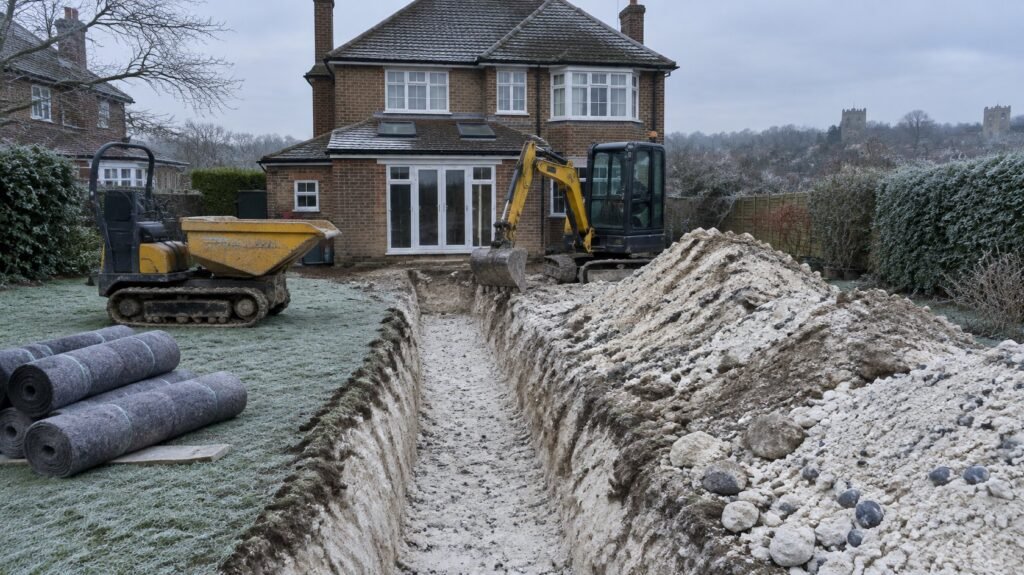
Services from our groundwork contractors in Banstead
| Service | Best for | What’s included |
|---|---|---|
| Site clearance and excavation | Extensions, new builds, garden rooms | Scrub and structure removal, dig, spoil loading and muck-away |
| Foundations and footings | Extensions and new builds | Trial hole, strip, trench-fill or raft foundations, building control visit |
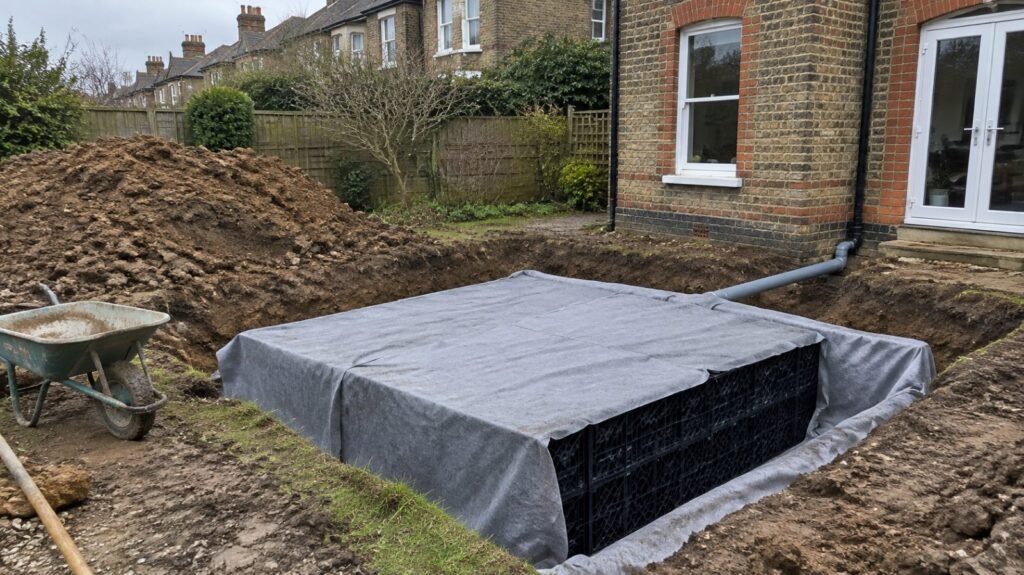
| Drainage and soakaways | Extensions, driveways, waterlogged gardens | Foul and surface water runs, inspection chambers, percolation test, soakaway |
| Driveway dig-outs and sub-bases | New drives and hardstanding | Dig to level, Type 1 sub-base, compaction, edging, permeable options |
| Concrete bases and slabs | Garden rooms, garages, sheds, yards | Formwork, mesh, pour, finish and frost protection |
| RC retaining walls and ground beams | Sloping plots and basements | Formwork, steel fixing and concrete by our own team |
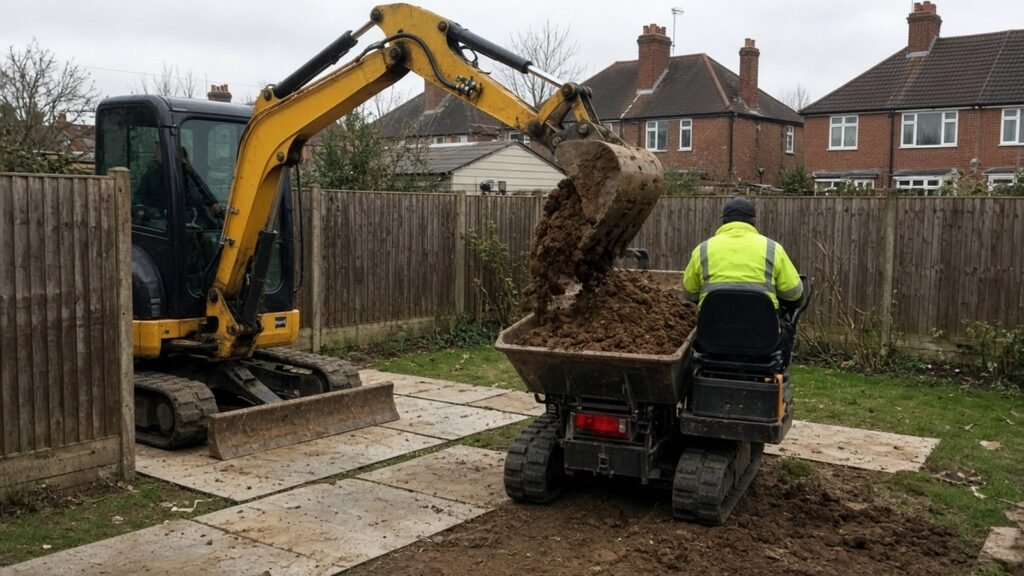
| Digger and dumper hire with driver | Your own project | Micro or mini digger, tracked dumper and an experienced driver |
Areas our Banstead groundwork contractors cover
Our groundwork crews work across Banstead and the neighbouring villages on the Surrey border. We cover:
- Banstead SM7: Banstead Village, Nork, Woodmansterne and the roads around Banstead Downs
- KT20: Burgh Heath, Tadworth and Kingswood
- Nearby: Chipstead CR5, Epsom Downs KT18, Belmont and Cheam SM2, plus Purley CR8 and Coulsdon CR5 and Sutton
Much of Banstead and Nork is 1920s and 1930s detached houses and semis on generous plots, with older cottages and villas near the High Street. Big gardens mean plenty of extensions, garden rooms and long drainage runs. Many plots slope, so stepped foundations and retaining walls come up more than people expect.
Banstead ground conditions: what we check before we dig
Banstead sits on the chalk of the North Downs. The British Geological Survey records chalk in the railway cuttings either side of Banstead station, and Banstead Downs itself is open chalk grassland.
That matters for two reasons. First, footings must reach firm, undisturbed ground, and soft or broken chalk sometimes needs a deeper dig. Then drainage behaves differently: chalk can drain well, but water can also wash it out under a badly placed soakaway.
- We dig a trial hole before we price foundations, so you see the ground before you commit.
- Building control checks the open trench before we pour, so nothing gets covered up untested.
- If the engineer asks for a deeper, wider or reinforced footing, we tell you the cost before any concrete goes in.
- We run a percolation test before we size a soakaway, and keep it well away from the house.

Why winter suits groundworks in Banstead
Most people plan extensions for spring and summer. But the groundworks can go in from November to February, so the builders start on a finished slab when the weather turns. That also means you book the trades you want before the spring rush.
Cold-weather concreting rules we follow
Concrete is the one part that needs care in the cold. NHBC Standards say ready-mixed concrete should be at least 5°C on delivery, it must not go onto frozen ground, and it should be covered to stay above freezing. So we:
- check the forecast and book pours for milder days;
- keep trenches and sub-bases covered so they don’t freeze overnight;
- lay insulated blankets over fresh concrete, held down at the edges;
- hold the pour if the ground is frozen, rather than risk a weak foundation.
Site clearance before the nesting season
Clearing scrub, hedges and old sheds is easier in winter, because plants are dormant and the ground is open. It also avoids nesting birds. Under section 1 of the Wildlife and Countryside Act 1981, it’s an offence to damage a wild bird’s nest while it’s being built or used. So clearing before spring keeps your project on time.
Planning, Building Regulations and Party Wall rules
Groundworks rarely need planning permission on their own, because they form part of the extension, drive or building you already have approval for. Even so, check first if your home is in a conservation area. Reigate and Banstead Borough Council says most of its conservation areas have Article 4 Directions, and you must give six weeks’ notice before cutting down a tree there.
Front gardens and driveways
Government guidance says you need planning permission if you lay more than 5 m² of hard surface in a front garden that sends rainwater onto the road. Permeable block paving, gravel or a surface that drains to a lawn avoids that, so we design the drainage with it in mind.
Building Regulations
Foundations and drainage fall under Building Regulations, so building control inspects them. We book the trench inspection, then pour once the inspector approves the dig. For drainage, they check the runs, the falls and the soakaway design.
Party Wall etc. Act 1996
Under section 6 of the Party Wall etc. Act 1996, you must give notice if you dig within 3 metres of a neighbour’s building and go below its foundations, or within 6 metres where the dig cuts a 45-degree line down from them. You must serve that notice at least one month before digging starts. We tell you at survey whether your job triggers it.
How much do groundwork contractors in Banstead charge?
As a guide, MyBuilder puts a groundworker’s day rate in Banstead at £120 to £360, and a strip foundation for a small extension at £3,000 to £5,500. Your real price depends on depth, ground, access and how much spoil leaves site. So we fix it in writing after a free site survey. These published figures give you a starting point (we checked them in November 2026):
| Item | Typical price | Source |
|---|---|---|
| Groundworker day rate, Banstead | £120 to £360 a day | MyBuilder |
| Strip foundation, small extension | £3,000 to £5,500 | MyBuilder |
| Machine excavation | £85 to £125 per m³ | MyBuilder |
| New foundations | £95 to £280 per linear metre | Checkatrade |
| Driveway groundworks | £20 to £100 per m² | Checkatrade |
The biggest cost drivers in Banstead are depth (soft chalk or old fill), access for the digger, how much spoil has to leave site, and drainage. Because we run our own machines, there is no plant-hire mark-up: our micro digger with driver starts from £180 a day. A free site survey gives you the real price, fixed in writing.
How long groundworks take in Banstead
Most domestic groundworks in Banstead take 5 to 14 working days:
- Site clearance: 1 to 3 days, depending on what has to go
- Driveway dig-out and sub-base: 2 to 3 days
- Extension foundations: 1 to 2 weeks, including the building control visit
- Drainage run and soakaway: 2 to 5 days, after the percolation test
In winter, we add a little slack for frost and heavy rain, and we tell you the day before if a pour has to move.
How to choose groundwork contractors in Banstead
Before you sign with anyone, check these points:
- They visit the site and dig or probe before they give a fixed price.
- They put the price, the scope and what happens if the ground is worse in writing.
- They hold public liability insurance and show you the certificate.
- They explain how they protect concrete in cold weather.
- They know the Party Wall, building control and front-garden rules and tell you which apply.
- They own or control their own machines, so the job doesn’t wait for plant hire.
- They can show you photos of real jobs and point you to their Google reviews.
Projects we take on
Typical Banstead jobs for us include foundations for single-storey rear extensions, bases for garden rooms and garages, new driveways with full sub-base, drainage and soakaways for waterlogged gardens, and retaining walls on sloping plots. On larger sites, our groundworks and formwork teams work together on ground beams, slabs and RC walls.
We don’t publish customers’ addresses, but we are happy to share photos of similar jobs. Ask us when you call, and see our portfolio and our Google reviews.

Why choose GSMS as your groundwork contractors in Banstead
- Own machines and drivers: micro and mini diggers and tracked dumpers, so no waiting for plant.
- Groundworks and concrete in one team: dig, drainage, formwork and pour without handovers.
- Free site survey and fixed written price before work starts.
- 10-year workmanship guarantee and full insurance.
Our groundworks process
- Call or WhatsApp: tell us the job and send photos or drawings.
- Free site survey: we check access, trace drains and dig a trial hole where needed.
- Written quote: a fixed price with a clear scope and programme.
- Notices and approvals: we tell you about Party Wall, building control and planning needs.
- Dig and build: clearance, excavation, inspection, foundations, drainage and sub-base.
- Hand-over: site left clean and level, ready for the next trade.
Groundwork contractors Banstead: FAQs
How much do groundwork contractors in Banstead charge?
It depends on depth, ground and access. As a guide, MyBuilder puts a groundworker’s day rate at £120 to £360, and a strip foundation for a small extension at £3,000 to £5,500. Checkatrade quotes £20 to £100 per m² for driveway groundworks. We fix your price in writing after a free site survey.
Can groundworks be done in winter?
Yes, and winter is a good time to dig. The main rule is concrete. NHBC says ready-mixed concrete should be at least 5°C on delivery and never go onto frozen ground. So we watch the forecast, pour on milder days and cover fresh concrete with insulated blankets overnight.
What is the ground like in Banstead?
Banstead sits on the chalk of the North Downs, and the British Geological Survey records chalk in the cuttings beside Banstead station. Chalk is usually firm, but it can be soft, broken or full of flints, and it changes within a garden. So we dig a trial hole before we price foundations.
Do I need a Party Wall notice for extension foundations?
You do if you dig within 3 metres of a neighbour’s building and go deeper than its foundations, or within 6 metres where you cut through a 45-degree line from them. The Party Wall etc. Act 1996 says you must serve notice at least one month before digging starts. We tell you at survey if it applies.
Do I need planning permission to pave my front garden in Banstead?
Not if the new surface lets water through, such as permeable block paving or gravel, or drains to a lawn or border. Government guidance says a new hard surface over 5 m² that sends water onto the road needs planning permission. We design the drainage with that rule in mind.
Is winter the right time for site clearance?
Usually, yes. Plants are dormant, and it’s an offence under the Wildlife and Countryside Act 1981 to damage a wild bird’s nest while it’s in use. Nests are rare in winter, so clearing scrub and hedges before spring avoids delays. We still check every site first.
How long do groundworks take in Banstead?
Most domestic jobs take 5 to 14 working days. A driveway dig-out and sub-base takes two or three days, and extension foundations take one to two weeks, including the building control visit. Frost, rain and spoil removal can add a day or two, so we confirm the programme in writing.
Looking for groundwork contractors near you in Banstead?
Send us photos of the job or your drawings and we’ll come and look at the ground. The site survey is free, and you get a fixed written price before anything starts. Book now and your groundworks can be finished before the spring builds begin.